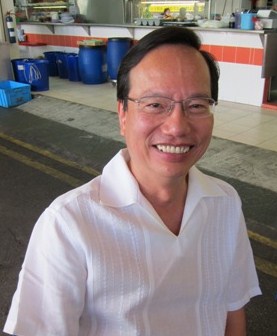
吴韦材,公教校友,全职作家,以小说、散文、杂文、诗、游记等文体发表过不少作品,其中尤以游记风靡不少读者,并掀起一阵年轻人的自助旅游热。
以下是他于2012年10月22日发表于联合早报有关母校旧校舍老操场的回忆:
想起老操场,因为不久前是母校校庆。
一年级到六年级都在这里。老操场那时感觉是无边无际地“伟大”,尤其在“放食”时,任谁走进去了,都会眼花缭乱地被蜂拥乱窜的学生海洋吞噬掉。一年级到六年级,顶多也就12岁,但那些噪音,那些吹弹得破的笑脸,那些还不必认识日子的天真,很惊人的。
诡异是,人越老,就越记得更早前的事。这老操场,清楚极了。
在街那边的一幅矮墙,是我们的“警察总部”。而对着校舍的高墙,就充作“贼窝”。小学生喜欢又跑又叫,多数爱玩警察捉贼。游戏很简单。一些学生扮警察,另些学生是贼,贼只要一离开贼窝就能追着来抓,抓到押回警察总部的墙边就不能动,必须等候另个贼来营救。营救也很简单,手掌打到一下就free了。我们玩到疯,其实什么都没有,却好像身后有几只UFO冲着追下来一样咿呀鬼震。那时也真的是一张白纸,警察和贼的定义或者抓与被抓的定义也都一点不懂,追的就一定是警察了,逃的就一定是贼了,糊里糊涂就一直信以为真,以为世界也就简单到那样。
那些在操场上打篮球的同学,都很讨厌我们这些玩警察捉贼的。
因为我们乱乱窜,整天都撞到那些正要投球或正要挡球的人。撞倒在地,擦破膝盖,头上起高楼,常见的事。有时也会打起来的。假如给学生巡察员逮到,两个都得抓到教务处。通常修士都不会罚先哭出来那个,这心思大家心里有数了,后来只要一被抓进教务处,个个都依依呀呀凄凉委屈地表演一番。
但修士也从来不会真的体罚我们,打得厉害的倒是老师,12英寸的木尺,打手板,像superman,老cowboy,还有教马来文的那位,都很会打。我们的肉长着一层又一层的顽皮,要打到痛,老师们看来都有点研究。打手板是不痛的,所以尺打下来要打在手指上,那才痛。通常,一个字spelled错了就打一下。假如10个字全错当然就是10下,就算只有一个字错也得挨一下。说起来要打一整班也得花些时候,大家被打惯了,发了簿子回来看看自己错了多少字就会乖乖排队走出去等打。其实气氛也不紧张,大家还打赌看谁的板子最“jak lat”,一齐苦中作乐,也就过了。
操场角头的楼梯口,是文具部。也没什么设计,柱子上挂个从上而下写着“文具部”的木牌,就用铁闸门拉起来围着一个小空间。里头倒是有位卖文具卖簿子也卖儿童图书杂志的老伯伯。现在我还记得他样子。整天ho ho ho笑,只是颇瘦,像减肥成功的华人版圣诞老人。我们要买什么,就全部堆挤在铁门外面把手拼命伸进去,拼命伸进去,我从没去想过他从里面看出来是怎个样子?一定很噩梦,一道铁闸门,永远数不清上上下下伸进来需索一切的小手,一定很像《苦海孤雏》的镜头。
小学时总是觉得从操场这一头跑到另一头已经是太远。
但我们好像不太在意这些远近。那个时代,成长的日子里,每天、每个阶段其实都会出现它们应该出现的启示,经验的学习,跟年龄心智是互相配合的,这是那个时代还能够自然有致的幸福。
后来才都知道了,孩童时光是最快消失的。如今一个个时代下来,现在很多孩子出世没多久就已经被逼离开这个角色了。
说的是呀,也进步得真快。
Showing posts with label Old Boys - 1950s/60s. Show all posts
Tuesday, October 23, 2012
Saturday, June 16, 2012
田詒鴻 Alan Thian Yi-Hong
美国皇佳商業銀行(Royal Business Bank)创办人、總裁兼總經理田詒鴻1969年高二毕业于公教。
皇佳商業銀行成立於2008年11月,截至2011年底,於短短的3年期間總資產已成長至5億2仟萬並擴展至7間分行,全年凈利更高達795萬,成績斐然。皇佳商業銀行更是第一家洛杉磯的華資銀行於拉斯維加斯巿設立分行。
皇佳商業銀行總裁兼總經理田詒鴻先生(Alan Thian) 強調,本銀行無建築貸款壞賬之隱憂,本銀行之經營以安全穩健為基本原則,不躁進,不嘩寵,絕對以客戶安全為最高準則。
田詒鴻先生(Alan Thian) 在2012年1月中旬榮任FDIC社區銀行顧問委員會顧問,田先生指出,由於經濟不景氣,加上銀行法規越來越嚴格,社區銀行競爭十分激烈,利潤也相對縮小。因此田先生表示他會收集南加州銀行業的資訊,尤其是檢查制度及法規太嚴等事項,提供給FDIC做參考,並為同業發聲。
这是FDIC自2009年成立以来,第一位也是唯一的华裔银行家获选。
Saturday, March 17, 2012
Han Tan Juan 韩山元
韩山元1955年毕业于公教中学附小。
韩山元1942年生于马来亚(今马来西亚)半岛柔佛州。现为新加坡公民。1949年,他随母回海南岛,在乡下念小学,1951年返新加坡。1955年毕业于公教中学附小,1962年毕业于中正中学高中部.韩山元曾任《知识报》、《民报》编辑兼记者.1983年起任《联合晚报》编辑兼记者,后任副刊部代主任。1996年年中调到《联合早报》任执行级记者兼编辑。2004年5月底,退而不休,继续活跃于文教界,并报读厦门大学历史系硕士班。他也活跃于社,1985年起担任新加坡海南会馆理事,现为该会馆文教部主任。
2012年3月17日《联合早报》于言论版交流站发表了题为《我们有双语优势吗?》的短文,其中提到“我曾参加过母校公教中学校友会纪念特刊的编撰工作,征稿时收到很多公教中学高中毕业的校友,有在军界、警界、商界、各政府部门担任高级职务的学弟,写来的是英文稿,问他们为什么不用华文,回答是:华文写不出来了。”。
希望校友读后提醒自己,我们的终身学习一直应该是“双轨”之旅啊。
韩山元:我们有双语优势吗?
常常听人说:新加坡有双语优势,但是现实生活告诉我们,新加坡实际上是“单语强势”的社会,真正通晓双语的人其实很少,精通双语的人才更是难求。
很多华人会讲华语,但那是日常生活会用到的简单华语,到小贩中心点食物、咖啡店叫茶用得上,但是谈论国家大事、民生或人文历史的话题。很多受过中等或以上教育的华人就很难用华语表达,换言之,他们的华语是文化含量很低的“巴刹华语”。
最近发生了好多事件,一再告诉我们,新加坡的双语水平是一高一低,高者并不高到哪里去,低者则低到词不达意,不知所云,让人啼笑皆非。
马林百列市镇会日前在乌美1道第319座组屋升降机旁,张贴了一张中英文告示,提醒宠物主人要清理宠物在公共场所留下的排泄物。这张告示的中文有漏字和语句不通等。短短两行字,错误竟达10处。这张告示海报从制作、印刷到张贴,过了一关又一关,竟然没有人看出那么明显的疏漏和错误,难道马林百列市镇会的人都是华文的文盲?他们没有接受过双语教育吗?
再说说近年来华人社团为了自我更新,引进了一些专业人士当理事,他们讲方言与华语都是“词不够用”,讲三两句就“死火”,只好转换“波道”,改用英语。我知道,有个会馆的理事会开会,竟然以英语为“第一语文”,有些理事几乎是完全不会讲华语。他们在学校不是有学华文的吗?
新加坡越来越多工商企业,明明是华人开办经营的,却没有华文名,我接触过这样的只有英文名的公司的老板,问他为什么没有华文名?回答竟然是“有个华文名就显得土里土气。”的确,很多没有华文名的公司照样赚钱发财。我认识几个来自中国的商人,他们的公司都只有英文名,没有中文名,我问他们为什么?回答是“入乡随俗”。这些公司的老板和执行人员的名片,全都把华文“驱逐”,只见横行的“豆芽”,不见“方块”。
许多原来在传统华校(从小学到中学)接受母语教育的成功人士,到了社会上工作、经商或当官之后,就自废华文“武功”,华语还能讲,华文文章不能写。我曾参加过母校公教中学校友会纪念特刊的编撰工作,征稿时收到很多公教中学高中毕业的校友,有在军界、警界、商界、各政府部门担任高级职务的学弟,写来的是英文稿,问他们为什么不用华文,回答是:华文写不出来了。
学了12年华文,最后是将华文荒废,这是不是一种教育的耗损呢?能全怪这些弃华文不用的成功人士吗?一个很现实的问题是:他们离开学校也就离开华文,在工作中几乎完全用不到华文,十几二十年下来,华文早已经“生锈”,不能再用了。
他们的子女看到老爸老妈弃华文不用(因为没有用的必要),能看得起华文吗?他们愿意步老爸老妈的后尘吗?我的一名老同学说:“我也希望孩子能掌握华文,极力鼓励他们学好华文,他们问我一句话:学了华文将来像你一样把它丢掉,学来做什么?我哑口无言了。”
这就是我们面对的现实问题,我不能不担心,我们只是抽象强调华文重要,但是具体做法上则是华文可有可无。如果这个局面没有扭转,我们哪有什么双语优势?
双语政策绝对是好,建立双语优势完全有必要,但将双语政策落实到行动中最重要。双语教育的成功不仅仅是看学生在学校学习双语的成绩如何,更看学生离开学校之后有没有继续使用双语,如果在学校学双语,离开学校就变成单语者,双语教育的成功就要大大打折扣了。
双语政策尚未成功,国人仍需努力。
(上文发表于2012年3月17日《联合早报》言论版交流站.)
Wednesday, April 13, 2011
刘威海 Bill Liu Wei Hai
William Liu completed his secondary 4 in 1963 at Catholic High School.
He retired as Chief Executive Officer of IT and e-commerce business Green Dot Capital in 20007. But, barely after six months into his retirement, he started with his former business associates Stream Global, an IT venture catalyst firm. The firm, which operates out of a 1,000 sq ft office in Genting Lane, focuses on companies in the infocomm, digital media and mobile technologies sector.
He is the Chairman and Managing Partner of the company. Unlike a venture capital company, a venture catalyst - a term coined by him - not only invests in start-ups but also mentors its young entrepreneurs.
He is currently also the the Chairman of W3 Infocomm Group Pte Ltd, a boutique VC.
Bill, as he is more commonly known, started his career in the I.T. industry in 1970.after graduating with a B.Sc Hons in Mechanical Engineering from University of Manchester and an M.Sc in OR & Management Studies from Imperial College.
From 2001 to 2006 he was President of Green Dot Capital Pte Ltd, which invested in start-up and early stage companies, globally. It was also the holding company of Singapore Computer Systems Ltd and SNP Corporation Ltd, both were listed on the Singapore Stock Exchange.
Prior to joining Green Dot Capital, he was the President & CEO of ABACUS International, Asia’s premier Global Distribution Systems (GDS) and Computer Reservations Systems (CRS) company and a joint venture company with Sabre, Inc of USA. Bill was responsible for its operations and profitable growth that spanned 20 countries in the Asia Pacific.
Prior to joining ABACUS, he was International Computers Ltd’s (ICL) Regional Vice President for Asia and concurrently the non-executive Chairman of the Singapore operations. He also served as General Manager of ICL Taiwan for a year in 1992.
He is currently a Board member of SISTIC.com Pte Ltd, the National Library Board and Monte Jade Singapore. He was the co-chairman of the Singapore British Business Council IT/Software Sub-Committee and Board member of Singapore Computer Systems. Mr Liu was actively involved in IDA’s 2015 “Intelligent Nation, A Global City powered by Infocomm” Master Plan, sitting on 3 sub-committees, viz. Infocomm Competency Council, Financial Services and Enterprise Development.
He was a past Chairman of the Singapore Federation of the Computer Industry (SFCI) from 1995 to 1998 and a Board member of the Singapore National Computer Board and the Institute of Systems Science. He is also a past President of the Operational Research Society of Singapore.
He says that starting Stream Global was a case of better late than never. 'If I were to start all over again, I would do it earlier as it is good to try things when you are young. Then, I would have had a longer time to decide if owning a business is really what I want to do,' he says.
These days, he reckons he drinks more coffee than ever before, thanks to daily meetings with potential and existing mentees to review their business strategies.
But he still has time to pursue his interests such as qigong. He has stopped playing golf due to a frozen shoulder.
While his wife supports his decision to work, she feels that he should not stress himself too much either. 'She knows that I tend to exert myself too much,' he says.
'But working keeps me mentally and physically fit, especially now that I enjoy what I am doing. It gives me satisfaction to be able to offer my experience and contribute to the creative and innovative eco- system,' he says.
.
.
Friday, February 18, 2011
Alan Yiu Tiong-Chai 姚忠在变成老阿伯
姚忠在于1969年毕业于公教高中二。就职于航空公司,经常写作,发表于各报章杂志。以下是发表于联合早报的老年感想。(2011年2月18日)
___________________
2011年2月18日,星期五,我终于60岁,变成老阿伯。
60岁衰老的脸,60岁退化的脑袋,使我越来越减分,忘记关门,忘记关灯,忘记关电视,是近年常有的事,朋友说“你这个糊涂蛋,别忘了穿裤上街!”
这点我肯定不会忘记,外祖母在家教我规矩,老师在学校教我礼貌,他们教导有方,使我终生得益,妈妈教我唱的《小小洞房》《孤儿乐园》《妈妈好》我也牢牢记住,她的嗓子那么动听,不灌录唱片传世,真是可惜。
妈妈为我主持过一次生日会,那年我九岁,满脸天真,她订了个漂亮的蛋糕,摆满一桌子的甜品美食,被盛情邀请的邻居小朋友们,笑嘻嘻闹哄哄,一唱完生日歌曲就吵着要吃,外祖母及妈妈为了伺候他们,忙得天翻地覆,那是我一生人中,最快乐单纯的生日,谢谢妈妈和外祖母。
往后的生日,逐渐失去了单纯性,脑袋随着人的成长,越变越复杂,举例说某些机构,因为我有被利用价值,所以要为我庆祝生日,跟我结交为“商业良朋”,把我好好的利用,榨到干绞到尽。
又譬如说,那朵“出墙肥杏”为我庆祝生日,以分散其出墙的注意力。
更复杂的,如果我是二战时的欧洲要人,希特勒为我庆祝生日,准是想贱价收购我的资源,运去德国制造攻击性武器,攻打自由欧洲。
随着人的长大,四周环境的改变,原本单纯的生日,越变越复杂,人原本单纯的心思,不也如此?心思在影响及需求之下,越变越混浊不清,跟人脸的变化一样,婴孩刚诞生时,细皮肉滑,脸色红润。中年之后,脸部酝酿着复杂动机。成为公公婆婆后,全脸的皱纹乱成一团,外人无法从沉默的老人脸上,猜测得出他们在想什么,满怀好意还是满怀恶意,老人太复杂了哟!
我常回去公教小学及中学,虽然学校已经搬迁,但我喜欢在旧的环境中,感觉童年及少年时的单纯,我们的同学交往至今,当他们知道我失去工作,生活困难,面对肝癌危险时,还出力帮助我生存,我衷心感激他们,没想到一把年纪,还感觉得到那份单纯,他们也在合力照顾张世典校长,大家都尊敬他深爱他。
60岁咯,希望我这只老兔子,能多写创意性的文字。
.
Wednesday, January 26, 2011
李国基 Patrick Lee Kwok Kie
Old boy Patrick Lee Kwok Kie is the Chairman (董事长) of Sing Lun Investments Pte Limited (星纶投资私人有限公司). He was borned in 1948 and left school in 1968.
Sing Lun Investments Pte Limited was originally founded in 1951 as a textile trading and wholesale company. In 1969, the company expanded into apparel manufacturing. Since then, the company has grown to be a renowned apparel contract manufacturer for international brands and retailers, supplying fashion apparels to the North America, EU and Asia markets. The company now possesses production facilities in Singapore, Malaysia, Sri Lanka, Cambodia, Vietnam and China. In 1999, the company transferred the apparel business to a subsidiary Sing Lun Holdings Limited. Sing Lun Holdings was listed on the Singapore Stock Exchange Main Board in Year 2000 and privatised in Year 2008. Besides the apparel business, Sing Lun Investments also invests in real estate, hotels and engineering businesses in Singapore, Malaysia, USA and China.
In 2009, the Singapore Management University (SMU) has established the Sing Lun Scholarships, Sing Lun Fellowship and Sing Lun Seminar Room with a S$1 million gift from Patrick Lee and his family. The gifts are named after Sing Lun, in honour of Patrick Lee's late father, Mr Lee Chee Hung (李子衡), who founded the business. The gift attracts a 1:1 matching by the Singapore government for SMU's endowment. To thank and recognise Patrick Lee and his family for their exemplary support of higher education and research at SMU, Seminar Room 2.8 at the Lee Kong Chian School of Business will be named Sing Lun Seminar Room.
Patrick Lee said, “We share SMU's vision to nurture all-rounded ethical business leaders of tomorrow. Through this donation, my family and I hope to contribute towards supporting the aspirations of SMU undergraduates, especially now more than ever, when access to financial resources is much needed. Educational causes have also been of special focus for my family and we hope the gift will also play a part in SMU's long term development as an outstanding institution of higher education and research.”
The Straits Times report on 26 Jan 2011:
In October 2010, Patrick Lee was elected secretary-general of the Singapore Federation of Chinese Clan Associations (SFCCA). Patrick siad that he agreed to step into the post because he wanted to follow in the footsteps of his father, the late Lee Chee Hung, founder of textile company Sing Lun. His father was known for his contributions to Kong Chow Wui Koon, the 170-year-old Cantonese clan association formed by fellow clansmen from their home town in Xinhui , Guangdong province, China . He died in 2003 at age 86.
.
.
In the past few years, he has been involved in more than 20 government-linked, civic and grassroots organisations in which he is either a trustee, patron, director, committee member or some other honorary title holder.
.
.
He now sits on the boards of the Singapore Chinese Orchestra (SCO), Business China Singapore, Chinese Development Assistance Council (CDAC) and Tan Kah Kee Foundation, among others.
.
.
He was elected vice-president of the Singapore Chinese Chamber of Commerce and Industry (SCCCI) in 2007, and will be the new chairman of Kwong Wai Shiu Hospital and Nursing Home when the new management committee is sworn in on March 6.
.
.
On the role of SFCCA, which celebrated its 25th anniversary at a gala dinner last week, he says: 'It was the importance of clan associations in the community and what they could do to preserve the good old values for the younger generation that convinced me to take up the challenge.'
Far from being irrelevant and outdated, Chinese clan associations have a role to play in society, he says.
He recalls how the early clan associations were set up by immigrants to help fellow clansmen related to one another by the same surname, dialect group or the province, county, area and even village in China where they came from.
'When Singapore was still ruled by the British, the Chinese community had to take care of its own members, and clan associations played the important role of providing basic social services such as education and health care,' he says.
Although the Government has taken over most of these roles since Singapore achieved self-government in 1959, he feels that the charitable and selfless spirit of the forefathers who set up the clan associations and provided for the poor and needy should be preserved and promoted.
'This is social capital which can contribute to building a nation of people who care, not a younger generation of selfish individuals who care only about themselves and go after material things,' he says.
As he sees it, another urgent task for the clan associations lies in integrating new Chinese immigrants who have arrived in large numbers from China recently.
Unlike the earlier generation of Chinese immigrants who came here to build a new life and future, he observes that many newcomers are here in search of better opportunities but have no sense of belonging.
'We need to help them integrate into our society and see Singapore as more than a place to work and buy a house to live in.
'As Singapore's birth rate is still far from the replacement level, we must continue to welcome new immigrants and foreign talents to help our economy grow,' says Mr Lee.
To prevent the emergence of a divided Chinese community in future, he wants to forge closer ties between Singapore- born Chinese and new Chinese immigrants.
One way is to bring the newly formed new immigrant groups into the Chinese clan federation's fold. There are now six such groups: Tianjin Club, Shanxi Association, Hua Yuan Association, Tian Fu Club, Kowloon Club, and the Singapore Chinese Scholars and Students Association.
'If left to themselves, the new Chinese immigrant groups may develop in another direction and the two groups can end up suspicious of each other. It will be a problem,' he cautions.
Noting that the new immigrant groups have expressed interest in joining the federation, Mr Lee says: 'Many told me they find living in Singapore interesting as they can meet Chinese from all over China here.'
On the immediate plans of the federation, he says the strength of his secretariat will be increased from the present 10 to 17 or 18 members.
'We need more event organisers and a bigger communications team because connecting and reaching out to members and informing them about our programmes will be our priorities,' he adds.
The number of its governing council members will be expanded to allow more clan associations to participate in the decision-making process.
There are now 15 members on its present council, with seven seats reserved for representatives from its seven founding member clans: Singapore Hokkien Huay Kuan, Teochew Poit Ip Huay Kuan, Singapore Kwang Tung Association, Nanyang Khek Community Guild, Singapore Hainan Hwee Kuan, Sam Kiang Huay Kuan and Singapore Foochow Association.
'So with only eight seats in the council open to contest at each election, few will have the chance to be on the governing council,' he points out.
By increasing the number of members on the council, the process of leadership renewal can be speeded up, he says.
Chinese language and culture is another area which the federation wants to promote this year. An annual cultural award will be instituted soon to recognise clans which excel in the promotion of Chinese culture and the arts.
Noting that the Chinese operas of all the major dialect groups are practised and performed by local groups, he says: 'They should be promoted and the federation will help the clans do so.'
The federation is also offering five annual scholarships to students for undergraduate studies in top Chinese universities.
The federation's headquarters in Lorong 2, Toa Payoh, which occupies the premises of a former primary school, will be undergoing a major makeover soon.
Last month, the federation closed the kindergarten in its headquarters after 20 years because of dwindling enrolment. It will make room for 'a historical corridor or passage' where the history of Chinese clan associations in Singapore can be told in words and pictures.
'We want our visitors to feel the spirit of selflessness and charity of our forefathers and understand our past when they step into our premises,' he says.
In his view, the future of Chinese clan associations lies in the younger generation. Each clan association has to address the problem of not attracting enough young members.
'They have to recruit more young talent and organise activities appealing to the young and to have them interested in their past,' he says.
He had already persuaded his daughter Anne to be the youth group leader at Kong Chow Wui Koon last year and hopes his son will join them at the clan association when he can find the time.
'I have even started taking my four-year-old grandson to the clan association's activities,' he quips.
Saturday, November 13, 2010
莊永康 Chong Wing Hong:叩问传统
莊永康1948年生,从1960年(中一)至1965年(高中)就读于公教中学。新加坡南洋大學理學士,倫敦西敏寺大學影視學碩士,曾任職新加坡《海峽時報》、英國廣播電臺(BBC)中文部、新加坡《聯合早報〉,兼任南洋理工大學傳播學院副教授。曾为《聯合早報》高級評論員暨專欄作家。社會工作:新加坡國家文物局委員。
现已退休。
媒體工作生涯中,曾獲日本-亞細安新聞協會獎學金(1985)、美國傑佛遜獎學金(Jefferson Fellowship, 1999)。
著作有文集《從霧都到南洋》、電影筆記《戲言》、新聞學作品《新加坡華社研究》、筆記小說《曇花鏡影》,並撰寫《化雨》大合唱全本歌詞,由作曲家潘耀田譜曲,在2001年新加坡藝術節由新加坡華樂團呈演。以下录莊校友2005年写的一篇文章供大家参考:
中华文化并非铁板一块
新中两地有文友在本报言论版上辩论,什么是中华文化?中华文化是不是就等于中国文化?各执一词。坦白说,那确实“因为新加坡与中国毕竟是两个不同的国家,对于同一社会现象的理解不尽一致”,情有可原。
是的,新加坡的写作人拥抱“中华文化”显得那么热情如火,而对接受“中国文化”一词则面有难色。为什么?没有在“南洋”生活过的中国学人,对于某些细微的差别是难以体会的,甚至觉得难以理喻。
内里乾坤,主要在于:其一、新加坡是个多元种族、多元宗教的世俗国家,处在多元文化的区域。在这水域里面,“同化”两字是相当敏感的,本区域任何种族之中都有反应极度强烈的人,不愿被他族同化。保留传统和维护民族文化的诉求,其实也不仅限于华族。
说起来,新加坡把华文华语定为华人的“母语”,务实的原因之一,也就在于表示国家政策并没有强迫任何他族学习华文。当然这也会产生负面影响,人们往往被“一族一母语”的思维框住,语言的传习难以跳出族裔的范畴。实际上,一名马来族或印族国人为了想“赶搭中国顺风车”而猛学华文,是没有触犯任何法令的,也没有违背任何传统。
其二、对中国学人来说,中华文化等于中国文化,那是天经地义,理所当然。不过对新加坡华人而言,“中华”与“中国”在概念上确有不同——字面上也不一样嘛!“中华”一词多涵盖文化,尤其是五千年文化这般诗意的表达;而谈到“国”字,就未免让人想到政治的层面。
固然,从纯文字看,“顿成泽国”、“红豆生南国”、“国色天香”的“国”,是没有政治意涵的。但从冷战时代过来的人,在不同体制内生活过的人,对“国”字无疑特别敏感。在政治语汇里面,“国”可以是“一个阶级压迫另一个阶级的工具”。
是的,时至今日,我个人也不喜欢动辄以过度敏感的字眼来论文化,到头来也论不出个所以然。我只想说明,任何阴影的存在都是客观的事实,不必掩耳盗铃假设事情从来没有发生,也不必纠缠不清,让过去的阴影形成我们前进的羁绊。认清事实的本质,应该是我们探讨文化议题的态度。
其三、华人应发扬“中华文化”,这一概念是被本地普遍接受的,至少可以公开提出来而不至于那么敏感。尤其到最近,鉴于中国改革开放带来的经济机遇,政治领导层也觉得有必要阐明,华人只要政治上效忠本土,认同中华文化毫不碍事。
当然,政界的表态只不过显露气候转变了,但人们是否要多添衣裳,是否要备好帽伞,还是得拭目以待。像本地华文写作界个别人士那种拥抱中华文化的热情,终归属于少数。许多人还在想,学好华文就能搭上顺风车,有那么“神”吗?我认为,质疑态度显示新加坡人渐趋成熟,是正常的现象,不见得是件坏事。
凭借着“南洋伯”的敏感,本人对中华文化素来也作了一些观察。根据专家的定义,中华文化是指从华夏文明发源,再经过约三千年沉淀而造就的汉文明。中华文化以汉族文化传统为核心,那是毫无疑问的。且看,一直到1911年完成的辛亥革命,也要打着“驱逐鞑虏”的旗号。
然而,中华文化是否具有一般想像中的划一性(homogeneity),那么浑然天成?那倒是值得检视的。
不错,当我们从深圳旅行到乌鲁木齐,发现中国城市现代化(也等于汉化)所产生的一致性,是令人惊讶的——是不是单调,见仁见智。而根据统计,中国人口93%是汉族。不过,与此同时,那其余的7%,却代表着55个民族。
55个,是指现存的民族。在历史上消失了、被同化了、被融合了的民族,那就不计其数了。那么在中华文化铸就的过程中,汉以外的这些民族所贡献出来的血汗、养分、冲击(让中华文化知道长进),又有多少呢?
虽然亨廷顿教授的文明冲突论有人觉得太过火,但历史上文明的产生,又的确是在不断冲撞、排斥、过滤、眉目传情、回心转意、吸收、糅合,各种过程汇集而成。汉族吸收外来文化如此:即使被认为宽容开放的唐朝,也曾经大力抗拒佛教的入传——唐三臧是偷渡出关取经的,皇帝并不批准。
少数民族的汉化,尽管对他们来说是利多弊少,却也同样是个极度无奈的过程。少数民族执掌政权的时候,如元朝、清朝,虽然都得采用汉语和汉式章典制度,但也同时提出了不少与“汉化”反其道而行的政策,实行起来亦非常惨烈。
近年由于思考上述问题,对一个历史人物——北魏孝文帝,特别感到兴趣。上网查阅,发觉中国国内知识界对此人的评价也莫衷一是,发出“盖世英雄还是千古罪人”一问,数年前便已辩到天翻地覆。
限于篇幅,有机会才与大家畅谈北魏孝文帝。不过,上述这些近期辩论却已告诉我们,中华文化并不是铁板一块,只要我们能冷静旁观,文化中的各种“色彩”就会缤纷呈现,罗列眼前。
Monday, November 1, 2010
李显龙:母亲葬礼上的致悼词 Lee Hsien Loong
李显龙在公教接受中学教育,1969年高二毕业。以下是他于母亲柯玉芝(逝世于2010年10月2日)葬礼上致悼词的全文。他说,由于父亲李光耀忙着政治工作,因此抚养孩子的重担都落在母亲身上。思母之情,感人肺腑。
Mama has always been part of our lives. Papa was busy with political work, so she did most of the bringing up of the children - me, Ling and Yang. She nurtured us, taught us, disciplined us, took care of us, and fussed over us. She would be home for lunch every day when we came home from school, spending some time with us before going back to work in the afternoon.
Loving but strict, she enforced clear rules, encouraged us to do well, and took pride in our successes. She kept the first school prize that I ever won, for doing well in kindergarten - a pencil sharpener in the shape of tiny trophy, which is still today, in the display cabinet at home.
Not surprisingly, Mama did not shower us with expensive toys, and rather disapproved when the grandparents sometimes did. But she would visit the textile shops that used to be in High Street, and bring us home the long cardboard rolls- the tubes, which were at the centre of the rolls of fabric, and had been discarded after all the fabric had been sold. They cost nothing, but they were great fun used as telescopes, for sword fights, and endless children's games. When I had my own children, my wife and I did the same.
We would visit our maternal grandparents at Pasir Panjang regularly. Their house was on the seafront, and at high tide the water would come right in to the seawall. We would swim in the sea, and Mama would sit on the steps watching over us. Once when I had almost learnt to swim but not quite, I got into difficulty- fooling around with a pair of goggles and a snorkel, and nearly drowned. Mama had to plunge in fully dressed to rescue me. She was not amused. Today, it's dry land.
When the boys went away to university, she fussed over us at long distance. She was a skilful knitter, and knitted us sweaters to stay warm, one after another. I still have one of them, a favourite rust-coloured one, patched many times at the elbows but still warm.
When Hsien Yang and I got married, she embraced her daughters-in-law as her own children. When grandchildren arrived, she helped to look after them, especially my two elder children - Xiuqi and Yipeng - after their mother Ming Yang died. She and the Popo supervised the maids, took the very little ones for walks every evening, and more than made up for what I could not do as a single father.
The years passed. Even in old age, Mama kept a motherly eye on her children. She would follow my public appearances on TV and in the press, and comment on my dress or demeanour or makeup, by the make-up artiste. After one particularly long evening function which both my parents and I attended, she reproached me and she said: "You were bored stiff, and looked it". When I fell ill with lymphoma, she worried about my children again, and also about me, fretting over whether I was eating enough nutritious food like bird's nest to stay strong and fight the cancer.
On Sundays the family would gather for lunch at Oxley Road. For a time it was with all the grandchildren, who would make a fine hullabaloo. But as the kids grew up and went off to national service, or went away to study, often it would be back to just Papa, Mama and the three children and our wives, plus Shaowu, the youngest grandchild.
One Sunday in May two years ago, we had the usual family lunch. I had spent the morning on a constituency visit to Tampines, and told her they were debating whether to allow bicycles on pedestrian footpaths. She reminded me that when I was in Cambridge and was mostly a pedestrian, I had written home to complain about the bicycles being a menace, because they crept up quietly on one from behind, giving no warning except for sinister whirring noises. I had completely forgotten, but she was right. She said: "The older I get, the longer ago the things I remember". But she tracked current events too, and knew what the hot topics of the day were. I think the hot topic at that time was serving beer at coffee shops.
The next day I was in my office when my security officer told me that Mama had fallen down at home, and Wei Ling was rushing her to NNI. She had had her second stroke. The last two and a half years have been difficult on her and on the family. Now she is at peace.
Over these last few days, I and my family have been deeply touched by the outpouring of condolences and fond recollections from people of all walks of life.We've stood receiving the visitors, reminiscing, shaking hands, delighting in seeing each other again or honoured that so many have come. She touched the lives of all those who met her, and many more who knew of her only through television images, media reports, or perhaps just by word of mouth. They sensed what a special person she was, and how much she had quietly contributed to Singa¬pore.
Thousands turned up at Sri Temasek to pay their respects. Some bowed or stood in silent prayer, while others crossed themselves or did a namaste. Still others fingered rosaries, and at least one lady spun a little prayer wheel. Many were visibly moved. Mama's children and our spouses stood beside her to acknowledge and thank them all, just as Mama had stood beside us so many times before.
All of our lives, Mama has been there for us. We have rejoiced together, grieved together, and shared many milestones and critical moments together. Now we will all have to learn to live without her. But she lives on in her children and grandchildren, in our cherished memories of her, and in the persons she has nurtured us into.
徐冠林 Su Guaning
![]() |
| 徐冠林 Xu Guaning |
徐冠林1964年毕业于公教中学后转入莱佛士书院读大学先修班。1967年得到总统奖学金和哥伦坡计划奖学金到加拿大深造。2003年1月1日出任新加坡南洋理工大学校长。
2011年6月第二个任期满后,徐冠林将卸下校长职务。他日前接受《联合早报》访问时,畅谈他担任南洋理工大学的感想。以下是11月1日《联合早报》所刊登的访谈中的一些话题。
没有考虑换地办校
新加坡国立大学上一任校长施春风教授卸任后到沙特阿拉伯阿卜杜拉国王科技大学当创校校长,徐冠林校长卸任后会不会考虑换给地方办校?
他微笑但是很坚定地说:“没有这个想法,虽然有人找我。”
他说,他下来希望能花点时间探讨自己的兴趣,比如寻找一些中国方面的机缘,以及一些个人感兴趣的研究项目。另外,徐校长的小女儿明年上小学六年级,他希望能有多点时间陪家人。
“过去八年非常忙碌,我觉得亏欠了家人,所以下来是时候‘还一点债’。”
三个机缘下建立南大名声
回首云南园八年,徐校长很感谢时代给他的三个机缘,让他能在国际学术界把南大的名声建立起来。
第一个机缘是在他上任那一年,当时的人力部代部长兼教育部政务部长领导的跨部门大学素质委员会提出《大学结构及大学生人力分配检讨报告书》建议,把我国大学生的比率从20%增加到25%,增加的学额主要在南洋理工大学,每年收生从4400名增加到6000名。
于是南大在2004年设立文学院,2005年设立数理科学院和艺术、设计与媒体学院。从此,南大学生有比较全面的学科选择。
第二个机缘是大学自主,让我国大学更重视学术人员办校。徐校长在那个机缘下大刀阔斧地对教职员的体制进行改革,把门槛提高,除邀请国际知名教授前来教学,也利用增加三所新学院而来的空缺,聘请许多年轻的杰出教授。过去三年,南大总共邀请了300位国际上杰出的研究人员。
第三个机缘是政府在2006年后拨出巨额支持科研工作。从2006年到2010年,政府五年里拨出的研究基金达135亿元,使得大学有更多机会争取研究基金进行各领域的研究。
南大原本不是研究密集型大学,为吸引高端研究人员,徐冠林校长在2007年邀请安博迪教授出任常务副校长。安博迪教授曾担任诺贝尔化学奖评选委员会主席,国际学术界的联络网很强。徐校长说,这几年南大在研究基金的争取方面和国大几乎大成平手,如果不是安博迪教授,南大不可能办到。(安博迪教授(Bertil Andersson)是瑞典籍的国际知名生物化学家,2007年加入南大。他在国际学术界声名显赫,曾担任诺贝尔化学奖遴选委员会主席。)
“在我就任第一年,我们争取到的研究资金是3000万元左右,2009年是3亿元,增加了10倍。”
虽然南大还是以理工科为主,但由于这些机缘,徐冠林校长在任内能把南大发展成一所学科广泛的综合大学,现在还筹办医学院,这是他这八年来感觉最满意的成绩。
希望南大复名 引起轩然大波
徐冠林校长出掌南洋理工大学初期,认真地阅读了南大迂回的历史,他曾希望把南洋大学、南洋理工学院到南洋理工大学50年的历史整理好,把模糊的桥梁搭建起来。
翻阅当时的许多关于他的专访和报道,看到是一个理想主义者的热情,他希望当南大变成综合大学后,还原“南洋大学”校名。
“那是2005年确定的一个新想法。我在2003年上任时和南大校友有很多交流,他们都希望恢复南洋大学的名字。”
那时候,南洋理工大学一些学生也认为“理工”两个字并不适宜。另外,徐校长参考一些历史资料包括《李光耀回忆录》后也认为,只要南大成为一所综合大学,去掉“理工”两个字不是大问题,复名是迟早的事。
徐校长这一想法引起轩然大波。他说:“对于复名,基本上南洋大学的校友分成两派,新加坡这边比较正面,就算正面,也希望恢复以母语教学的比重。海外更复杂,海外南大校友对新加坡现在的发展不是很了解,他们的理解还停留在殖民地或者是建国初期。他们多数觉得,南洋大学的实体已经不在了,再恢复叫南洋大学,是‘冒名’,不是‘复名’。”
回想当年,徐冠林校长语气中带有感慨地说:“既然有那么多问题,我觉得把精神放在那里会影响办学,于是把这个问题搁置。”
放下这个问题后,他的思路更清楚,他认为要把南大办好,需要发挥自己的优势和特色,而南大应该维持重视理工的优势,加强科技方面的突破。如今,南洋理工大学的工科和理科占了70%,以这样的组合成分来说,“理工”两个字确确实实是南大的特色。
徐冠林校长很理性地给南大复名的事件做一个总结说:“南洋大学给我们留下的最重要遗产,一个是校园,一个是精神。我刚来的时候,南大精神没有真正传承过来,现在我认为要让南洋大学校友感到欣慰的是,我们把南洋大学‘自强不息,力争上游’的精神传递了下来。”
Su Guaning (1950– ) Scientist, engineer and academic. Born in Taiwan, Su Guaning moved to Singapore when he was seven years old. He studied at Catholic High and Raffles Institution, and won a President’s Scholarship. In 1967, he was awarded a Colombo Plan Scholarship. He studied electrical engineering at the University of Alberta, Canada, and went on to earn a master’s degree from the California Institute of Technology, and a PhD from Stanford University.
From 1986 to 1997, Su was Director of the Defence Science Organisation, corporatizing it as DSO National Laboratories in 1997. He left in 1997 to head the Defence Technology Group at the Ministry of Defence. In 2000, he became the first chief executive of the Defence Science and Technology Agency. He has also played a prominent role in national science and technology policy since 1988, helping to establish the National Science and Technology Board, and serving on it from 1991 to 2001.
Su was awarded the Public Administration Medal (Gold) in 1998 and received the National Science and Technology Medal in 2003. He was awarded the Chevalier of the Legion of Honour by the president of France in 2005. He became president of Nanyang Technological University in 2003.
.
Thursday, October 14, 2010
Tay Peng Hian 郑炳贤获选为国际集邮联合会的会长
![]() |
| Tay Peng Hian 郑炳贤 |
Catholic High alumnus Tay Peng-Hian (Senior Middle 3/1961) was elected as the new President-leader of the prestigious body Fédération Internationale de Philatélie (FIP) on 10 Oct.
FIP has looked after stamp collectors and philatelists since 1926 - growing from a society of a handful European Philatelic Federations to a Federation with a network throughout the world with
- 87 Regular Members (National Philatelic Federations)
- 3 Associated Members (Continental Federations)
- Promotional Members (a new type of Membership for Postal Administrations).
Tay Peng Hian started participating in FIP events as early as 1978. He was an exhibitor at PRAGA 1978. Thereafter, he has seamlessly built up 3 world class collection that won him 4 coveted FIP Grand Prix Awards:
1. Straits Settlements Classic:
Grand Prix International PHILAKOREA 1984
2. Burma Classic:
Grand Prix International POLSKA 1993
3. Netherlands Classic:
Grand Prix International PHILAKOREA 2002
Grand Prix D' Honneur CHINA 2009 (FIP Champion of Champions)
.
.
郑炳贤自1978年首次参与布拉格(前斯洛伐克首都)邮展以来,一直热衷并积极参与国际集邮联合会所举办的各项活动。他编组的三部世界级邮集,在世界邮展中荣获了四次大奖(最近一次是在中国2009洛阳世界邮展上获得荣誉大奖)。郑炳贤于2002年在韩国首尔举行的国际集邮联合会代表大会上开始担任理事,并于2006年连任至今。
今年10月10日获选为国际集邮联合会的会长。
Tuesday, April 27, 2010
张东孝 Daniel Teo Tong How: 变公教旧校舍为艺术中心 张东孝砸250万回母校听钟声
Daniel Teo studied at Catholic High from 1956 (Jr Middle 1) to 1961 (Sr Middle 3). Below is a report by Zaobao today:
公教校友、煌孝集团主席张东孝对母校感情深厚,他事业成功后不忘回馈母校,去年和好友一起标下由两栋建筑组成的公教中学旧校舍,虽然租期只有九年,却不惜投下250万元改建成综合艺术中心“222 Queen Street”。当他再次听到校舍隔邻教堂传来的嘹亮钟声,觉得就是那少年时代熟悉的钟声召唤他回到母校。
很难想象,当年在旧公教中学课室默默上课的少年人,有一天会成为新加坡的著名房地产发展商。更值得一提的是,他要让自己的母校旧貌换新颜,在新时代里,为它找到新的使命,使它在几个月后,成为一个具特色的多元综合文化艺术中心,同时不忘保留母校的历史和文物,在建筑中设立校友厅,也拟议兴建一个公教博物馆。
■ 悠扬的钟声唤醒回忆
这名公教的优秀校友,就是67岁的煌孝集团(Daniel Teo & Associates)主席张东孝。他的夫人是新加坡著名芭蕾舞蹈家吴素琴。张东孝本身曾留学澳洲学建筑,对于音乐、舞蹈、美术、集邮等都有浓厚的兴趣。
访问当天中午,窗外忽然传来隔邻教堂的嘹亮钟声,他感触良深地说:“这是我最熟悉的声音”。也许就是这阵阵悠扬的钟声,一再唤醒这位老校友在公教六年学习生活的回忆,使他毅然砸下250万元的重资,为一座废弃了20年的旧四层校舍,注入新的生命和活力。他说:“刚搬进来时,发现这里的情况非常糟糕,厕所卫生条件差外,电线很多被人偷窃。本来学校是和教堂相连的,后来已被一道灰色围墙所分隔。”
■ 为文化区增添光彩
在回忆校园生活时,张东孝说:“当年有很多儿童修士,给我留下深刻印象,他们一律剪光头,非常可爱。不得不提的是创校校长、法国籍的劳爱华神父,后来的张世典修士和宋宝书修士,后者到马来西亚创立吉隆坡的公教中学时,我们还经常有联络。”
张东孝一度是公教校友会董事。对于自己目前的一系列努力,他说是在回馈母校和社会。
旧公教中学位于奎因街和滑铁卢街之间,校舍在原址已经矗立了75年。张东孝说,集团去年和另一名志同道合的好友刘先生(Andrew Lau)成功标到这个由前后两栋建筑组成的旧校舍,并把它取名为“222 Queen Street”。目前整个维修工作还在紧锣密鼓进行中,预计工程将分段在四至六个月内完成,可以预知的是,到时将为这个新加坡最有文化、艺术环境和气氛的地区,增添异样的光彩。
近几年来,在多方面合作下,本地有不少旧建筑改为艺术场所,其中如附属于新加坡美术馆的“8Q当代美术馆”,前身是公教附小。而位于爱美丽山的Old School展馆,曾是美以美女中的旧校舍。空置多年的Alkaff公寓,未来也会改建为综合性画廊、博物馆和餐馆的休闲去处。
当局认为:拥有丰富历史的建筑物大多位于黄金宝地,具有人潮众多,交通方便,靠近市区的优点,这可帮助发展商和经营者节省重建的庞大费用。
■ 希望公教校友捐献文物
重要的是,正如张东孝所说:“这些旧建筑都富有历史和艺术观赏价值,虽然目前新加坡只有百余间保留性建筑,我们这次的租用期也只有短短九年,在翻新时,还是要照顾到保留建筑和历史古迹的条件要求。”
那么,旧公教中学又会留下什么珍贵文物和遗迹?
他说:“我非常希望能发动校友有钱出钱有力出力,尤其捐献一些珍贵纪念品给公教博物馆。目前找到一个杯子,是李资政夫人当年把两位公子李显龙总理和李显扬送到公教读书时的家长纪念物。公教校友广泛分布于社会的各个领域,相信他们手头,一定有许多宝贵的公教文物。”
另外,维修后的综合文化艺术中心,除了保留原有的楼梯、木门、壁画,墙上的校徽,黑体的书法校名也重新粉刷,上色,公教校友熟悉的四楼礼堂中的学生画作,也是重点保留项目之一。”
80%空间作艺术用途
张东孝谈到综合文化艺术中心的具体用途和规划时说,整个四层楼的可用面积是6000平方公尺,在维修完成后,其中80%将作为艺术、文化用途。
基本规划是:注重新的概念和传统的保留。目前使用的是二楼和四楼的空间,出租率高达70%。
●一楼:
全部冷气的一楼,将作为餐饮用途。但经营上不走高格调路线,服务对象是一般公众人士,定位在提供快餐,让上门的顾客至少有五六种口味选择。
●二楼:
艺术与画廊将是主打。目前已成功吸引到一家德国画廊Art Trove前来。
这里也是张东孝展示私人收藏品的美术馆。有好些绘画作品,是当年他在金炎路与一名瑞典画商共同开办画廊时的收藏。
目前在二楼展出的,是公教前美术老师冯所尧的“创意美学系列”水墨画。
●三楼:
这里将是3D电影院所在地,也是音乐学院、摄影艺术工作室和乐活健身室。同时是一间大型校友厅,以后供校友活动的地点。
●四楼:
四楼将为公教校友带来最多温馨回忆。这里是目前的小型校友厅和未来的公教博物馆所在地,过去则是学校礼堂。
之所以利用这个空间,是因为它的屋顶够高,空间也够大。校友们将可回来观赏当年他们在这里的墙上留下的众多画作。
四楼也是“新加坡芭蕾舞蹈学院”的新址。过去该学院一直在福康宁山的艺术中心活动,目前共有学生500多名。
Monday, April 5, 2010
吴韦材写黄伟光老师 Ng Wai Choy
吴韦材,公教校友,全职作家,以小说、散文、杂文、诗、游记等文体发表过不少作品,其中尤以游记风靡不少读者,并掀起一阵年轻人的自助旅游热。
1997年离开南极后,他到中国北京电影学院电影导演系学习1999年底回国。现在专注于舞台剧演出项目,最新剧作为《友善角落》、《生命中难以承受的猪》(我爱猪猪),最新著作为《吴韦材异境奇幻》及《吴韦材错体古典》。 2000年,他在互联网上设制一个属于自己的网页,称为摇摇网(yoyonet.com)。内容丰富,画面精美。网页内容共分成十大栏目,即《情爱生活》、《饮食男女》、《精品文化》、《美丽世界》、《新元素时代》、《家居空间》、《健身所知》、《网友优 待》,而《车迷乐园》及《近期推出》还在筹备中。在这些栏目中,又分成许多小栏目,如在《文化精品》中,又包括了《激情感官》、《收藏家与艺术鉴赏》、《雅俗共赏》、《电影弹赞区》、《接触吴韦材》、《娱乐前线》、《传统戏曲荟萃苑》,让网友能在这里接触到艺术工作者、作家、名人、主持和学者,互相交流人生品味与心得。
今年三月,校友会组织了三峡游,这是他四月5日在联合早报发表的有关文章。文章里特别提到了今年八十多岁的黄伟光老师。
‘ 校友会组织三峡游览团,80余名不同年代的校友一齐畅游。更教人值得高兴是,我还看到张校长和两位教过我的老师。校长与老师,年纪也都确实老大了,但他们精神状态都很好,更幸运是一路上只要有机会,我都能跟随在长者身边,尤其黄老师,那头偶尔飘飘然、积累着人生丰富智慧般的白发,还有慈祥可亲的言语,有时甚至还来点幽默,让我这趟旅途倍感温馨难忘。
其实是,我自己年纪也不小了。我想假如不是现在的我而是20年前的我,相信这份感触还不至于如此强烈。可现在我也是个老师了,有些心情,现在的我就如有了默契般,也明白了多一些。
这就像,我最初写游记时总喜欢原汁原味的现场感,写到后期我才发现,一座山一片海一个城市所能给我最确切的体会,其实是过后重新在自己思维里将它们再次塑模起来的时候。就因有所沉淀,所以倍感清晰,就如那座山那片海那个城市,真正烙上自己的体会,那才是真正到过的。这也就如一个人,一段过往,或是人生的某个阶段,也因为凝合上自己不断反复的回顾,它们才越加真实地牢固起来——除非我刻意铲掉自己少年时代让它随风而逝,但假如无论那时代是甘甜是苦涩我都认为是自己一生里无法分割的部分,那么我更愿意使它们坚固起来,那就是我,而我要完整的一生。
旅途上有位92年毕业的小学弟很天真地问我,当然,问这问题时他只是一片坦然的直觉,他问:“你们每次聚会无论多人少人都是这样一齐唱校歌的么?”我说,“对啊。”他问, “不会觉得怪怪么?”我笑笑说,“不会啊。”看他神情还是不甚明白,我就安慰他,“你现在还小,等你年纪再老大一些,等你一天感到有些自己青春年少的记忆渐渐被磨得模糊时,你就会大大声一齐跟着唱了。”我都还没告诉他,唱校歌有时唱到感觉涌来之际,好像唱完就可以坐下来上课,感觉空中就像有个熟悉瞬间,虽闪电而过,却那就是真实。
旅途上,黄老师的手常扣在我臂弯里,下梯级时,他会稍稍用力,黄老师是我们训育主任,他教学风格还是挺严厉的,除教授课文,黄老师更多时间是教我们这班猢狲如何好好做人,当年年少的我,并没强烈感觉到这一课人生启蒙是紧紧地扣在他的指引上,如今在我臂弯里,在这绵延不断的山峦和这源远流长的江河间,我真真切切地感觉到这指引过我的手,除了人与人的信任与温暖,也确切地感到在一个老师与一个学生之间,其实就是一份深深凝成的情谊。
快半世纪了。半个世纪前这些师长掀开我们人生道途的启蒙,半个世纪后今天,我们还能携手并行于山水间的美好人世,一分,一秒,都是珍惜。’
Saturday, March 20, 2010
巫顺昌 Moo Soon Chong
巫顺昌于1964年毕业于公教高中二。他于2010年3月16日逝世,享年63岁。生前是新加坡体育学校的首任校长。以下是联合早报3月19日报道李显龙总理(也是公教校友)对巫顺昌的评价。
我国需要更多像巫顺昌这样热心献身栽培新一代,而且又能成为莘莘学子楷模的教育家。
- 李显龙总理
李显龙总理称赞已故的体育学校创校校长巫顺昌,是一位脚踏实地、献身服务的教育家。
他昨天在致给巫顺昌夫人黄瑞娥博士的唁文中,赞赏巫顺昌对华文教学的热忱。在1998年担任学校华文教学委员会委员时,就客观地理解了双语教育政策在日渐普遍讲英语环境中的挑战,协助委员会拟定好一些改善华文教学的建议,包括创设供华文程度较弱学生选修的“华文B”课程,以及建议南华中学成为第10所特选中学。
李总理也表扬巫顺昌协助创建新加坡体育学校,以及在担任该校第一任校长时所制订的正确办学方针。
他说,我国需要更多像巫顺昌这样热心献身栽培新一代,而且又能成为莘莘学子楷模的教育家。
李总理致给黄瑞娥博士唁文
敬爱的巫夫人,
巫顺昌先生逝世噩耗传来,我深感难过。
巫先生在教学专业服务了36年之久,不愧是一位资深教育家。他热爱体育,待师生谦逊随和,执教不倦。人们将永远怀念他。
初识巫先生是在1998年,那年他在我设立的学校华文教学委员会中担任委员。当时,他是圣公会中学的校长。我发觉他是一位献身服务而且脚踏实地的人。他客观理解我们双语教育政策在日渐普遍讲英语环境中的挑战,对华文教学充满热忱。他深知学生在学校该学习什么以及该采取哪一类措施协助学生更好地掌握华文。他的丰富经验和见解,协助委员会拟定出好些建议,包括创设供华文程度较弱学生选修“华文B”课程,以及建议南华中学成为第10所特选中学。
2002年,巫先生协助构想和策划我们全新的新加坡体育学校,并成为这个两年后开课的学校的校长。教育部和社会发展、青年及体育部特地邀请他担当这个重任,就是为了确保体校能够成功而且顺利开办。他在体校从无到有的建设过程中以及为该校制订正确办学方针方面,起着举足轻重的作用。2004年,我在巫先生的引领下参观了体校。他对体校引以为豪,无庸置疑的全体教职员和学生在他英明领导下也深深受到激励。这可从该校做到体育训练与学术教导方面保持平衡的情况,以及栽培出多名杰出运动员的事实中显现出来。
我国需要更多像巫先生这样热心献身栽培新一代而且又能成为莘莘学子楷模的教育家。
谨此致悼
李显龙
Thursday, March 11, 2010
Tan Chin Tiong 陈振忠
Old boy Tan Chin Tiong, who is the President of the Singapore Institute of Technology was in new recently, as reported by Today newspaper on 10 Mar 2010:

Although it is not officially the Republic's fifth university, Singapore Institute of Technology (SIT) president Professor Tan Chin Tiong seems certain on the direction his six-month old organisation should take.
In an interview with MediaCorp, Prof Tan said that among SIT's long-term plans is "that we will evolve into a university".
"It will take a while (so) for a start, we will leverage on the foreign universities first ... When we have the capacity, our end point is that we want to offer dual degrees together with the foreign universities," said the 61-year-old, who is also one of the founding academic members of the Singapore Management University (SMU).
"But along the way, we will tweak the equations and get more dimensions to the template."
Things can be said to have progressed quickly since Prof Tan took the helm of the institute, which was formed last year to provide another route for polytechnic students to upgrade and obtain industry-relevant degrees.
Although these programmes were originally slated to start in 2011, SIT and the polytechnics here will launch its first programme for eight degrees in partnership with five overseas universities from August.
According to Prof Tan, SIT is able to start a year ahead of schedule as it has been able to tap on the strong relationships that the Ministry of Education and other ministries and agencies, such as the Economic Development Board, have with overseas educational institutions.
Schools partnering with SIT include Germany's University of Technology, Munich, for electrical engineering and information technology; and the United Kingdom's Newcastle University for naval architecture, offshore and marine engineering.
The DigiPen Institute of Technology and the University of Nevada, Las Vegas - both from the United States - will also team up with SIT to offer degrees in animation and game design and hotel administration, respectively.
Finally, the Culinary Institute of America will also offer a degree programme, although details are not available as yet.
Said Prof Tan: "The five overseas universities that we are partnering in our first wave of degree programmes have a presence in Singapore and are already offering their programmes here or have been receiving polytechnic graduates in their home campuses".
Not only are these partners familiar with the Singapore education system, they also "have confidence that it produces high quality polytechnic graduates who are able to articulate into their programmes", he added.
Education Minister Dr Ng Eng Hen told Parliament yesterday that not only will SIT's unique model bring together these renowned institutions here but "these leading partners will add value and recognition to our polytechnic diplomas as they provide advance standing".
Graduates will also be able to obtain to obtain degrees after two years instead of three to four, said Dr Ng, who is also the Second Minister for Defence.
The participating institutions have been chosen not only because they are leaders in their respective disciplines but also because SIT "wants to create degree opportunities not offered by the other schools. We play a role in offering diversity in the education space", said Prof Tan.
Ngee Ann Polytechnic's director of planning and projects office, Mr Peter Lam, described the new courses offered by SIT as "both affordable and very attractive".
Prof Tan said the challenge is to let polytechnic graduates know that "their route to the universities does not lie only with the National University of Singapore, the Nanyang Technological University or the Singapore Management University". (The fourth university - the Singapore University of Technology and Design - will be ready in 2011.)
Prince Peter Jacob, a 25-year-old who is pursuing a naval architecture degree at Newcastle University, said: "There is a high demand for qualified engineers, especially in the marine industry."
Saturday, December 19, 2009
为什么新加坡著名心理医生杨新发会用“毛泽东思想”治疗心病?
杨新发于1955年至1965年就读于公教中学。
杨新发和他的特色诊所
“毛泽东思想是锐利的精神武器”,这句话在今天的新加坡得到了印证!名贯新加坡乃至东南亚的心理名医杨新发先生,多年来坚持用曾被称为“红宝书”的毛主席语录治疗患者的心理疾病,取得了良好效果。近日,《环球时报》记者带着好奇心专访了这位与众不同的新加坡医生。
诊所像座红色博物馆
记者一走进杨医生的诊所,就仿佛置身于一座迷你“红色中国博物馆”。诊室里的背景音乐是《唱支山歌给党听》、《北京的金山上》这样的革命歌曲,墙上贴着大幅油画,画面上是系着红领巾的孩子笑容灿烂地围在毛主席身边,还有农民拿着锄头、镰刀快乐地干活。一排排的展示柜里摆放着珍贵的陶瓷文物,红色娘子军、保卫珍宝岛、为人民服务、白毛女等,琳琅满目,煞是壮观。这一切让整个诊所荡漾着革命浪漫主义情调。
杨医生就是在这样的工作环境下,展开对患者的心理治疗的。一说起用“红宝书”治病的“绝招”,他立刻滔滔不绝起来。
用“红宝书”治疗忧郁症
“星星之火,可以燎原——别轻视抑郁症。如果不重视和及时治疗,会影响你的生活、工作,严重的还会导致自杀。”“从群众中来,到群众中去——预防与医治心理疾病,不能单靠心理医生,要发动群众,全民动员,提高对疾病的认识与警惕。”这些语句都是他的治病“药方”。在与病人的交流中,他常挂在嘴边的还有“道路是曲折的,前途是光明的”,“排除万难,争取胜利”等人们耳熟能详的毛泽东名言。多年来,杨医生就这样将毛泽东思想中的积极因素应用到抑郁症治疗中,从而取得了非常好的心理治疗效果。
其实,这间“红色博物馆”也帮助杨医生起到了很好的心理调节作用。杨医生每天的工作时间都会超过常人,在有限的闲暇时间里,看看诊室中栩栩如生的陶瓷和画中人,他总能感觉到压力在悄悄地被释放。他说,红色文物中所包含的积极向上、人定胜天的精神,已经成了自己在工作之余解压的一剂良药。
不遗余力推广毛泽东思想
据记者了解,在新加坡这个多年以英文教育为主的国家,大多数人对毛泽东思想以及红色革命年代,都是有耳闻却谈不上了解。像杨医生这般了解、痴迷毛泽东思想的人,并不很多。而这一切,都源于他对毛泽东思想的崇拜和深刻认同。
从上世纪90年代开始,杨医生就开始了红色文物收藏之旅,至今,他已收集了3000多件 “宝贝”。这让他在新加坡还拥有了另一个响亮的称号——“红色收藏家”。在这条路上,杨医生又不知不觉地被那个年代的精神所感动,而从单纯的文物收藏转变为学习、研究、推广毛泽东思想。他在自己的母校新加坡公教学校(也是新总理李显龙的母校)开辟了“中国文物展示柜”,在社会上不定期举办“毛泽东学习小组”,并向青少年介绍中国的发展状况。杨医生还有两个更大的心愿,筹划个人的“2008年中国文物展”和建立一座大型红色中国博物馆,将自己数十年的心血与更多人分享。
Subscribe to:
Posts (Atom)